 By Saifullah Alam
We sell both. Spadasoft builds custom software for clients and also runs its own off-the-shelf products, WAWCD and WABPO, so we see this decision from both sides and have no reason to push you either way.
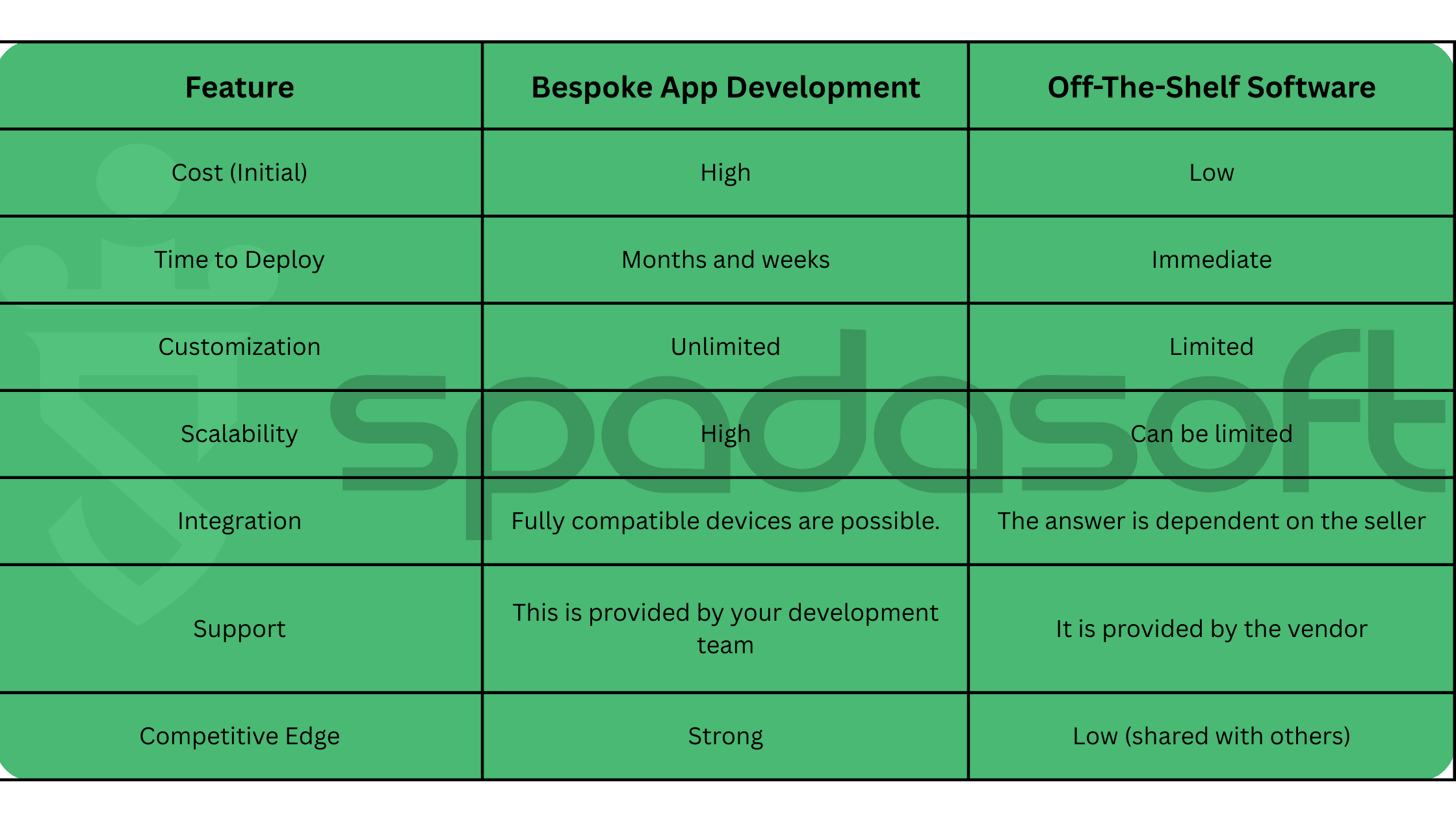
The short answer: buy off-the-shelf when your process is common, and build bespoke when the process itself is what sets you apart, or when no product fits it without constant workarounds. Many businesses end up in between: an off-the-shelf product for the standard work, and a small custom build for the part that is truly theirs.
Here is how to tell which side of that line you're on.
Bespoke App Development - Your Software, Your Rules
Imagine going to a boutique that designs your outfit specifically for you - selecting the fabric, the fit, as well as the small details like buttons. This is what custom software can do for your business. It is specifically designed to fit the workflows of your company, its brand and plans for the future.
Pros of Bespoke Apps
- Custom fit - No extra options, no confusing workarounds. All features are designed to work the way you function.
- Scalability - You are able to keep developing new options as your company grows without having to worry about software limitations.
- Competitive Edge - Customized tools will give you the capabilities that your competition doesn't have.
- Integration Heaven - Seamlessly connects with existing systems, such as the accounting system, CRM or inventory instruments.
For instance, a logistics firm might purchase a customized tracking application that connects with their GPS, customer portal, and billing in one seamless flow - something that generic software could not provide all the features.
Cons of Bespoke Apps
- A higher upfront cost - The cost includes designers, developers, testing, and maintenance.
- More time to develop - Depending on the complexity of your project, it may be weeks or even months before the time to launch.
- Specific requirements must be clearly defined - Without having a clear understanding, there is a risk of delay or misaligned functions.
Off-the-Shelf Software - Ready in Minutes, Not Months
Off-the-shelf software can be compared to purchasing directly from the store rack. Try it out, perhaps tweaking it, then you're good to take it on.
Pros of Off-the-Shelf
- Instant Setup - No need to wait for the development process to begin; you are able to begin using it immediately.
- Low Initial Cost - Most often available as a subscription, or as a one-time licence.
- Affirmed reliability - Use by thousands of customers. So, the majority of issues have been resolved.
- Support and Updates - Regular patches and security updates, and feature updates are included.
An example:
A bakery could use a well-known POS (point-of-sale) application that has integrated inventory monitoring, sales reports, and customer loyalty functions from the beginning.
Cons of Off-the-Shelf
- Not the Perfect Match - It is possible that you have to alter the way you perform your work in order to fit the program's limitations.
- Small Customization - Major features are usually based on the roadmap of the vendor.
- Problems with Scalability - As the demands of your business grow, it is possible to move to a different platform.
- Perpetual Costs of Subscriptions could add up over many years.
How to Decide Which is Right for You
Before you decide, ask yourself:
- What's My Budget? Bespoke is a little expensive, while buying off the shelf can be affordable to begin with.
- How Soon Do I Need It? Off-the-shelf is faster Customized takes time, but provides exactly the product you need.
- Do I Need Something Unique? Bespoke can be a great way to gain competitive benefits.
- How Will My Business Grow? Consider the next three years. Does your program still fulfil your requirements?